

Home / Tours / Shared Tours /
Treasures of Romania & Bulgaria Tour - 11 days
Shared tour of Eastern Europe Group up to 6 persons


Highlights of the tour:
Regions
- Wallachia
- Transylvania
- Maramureș
- Bucovina
- Moldova
- Northern Bulgaria
- The Balkan
- The Northern Thrace
- Shopluk
Cities
- Bucharest
- Sibiu
- Cluj-Napoca
- Brașov
- Veliko Tarnovo
- Plovdiv
- Sofia
Major Sights
- The Romanian Parliament
- Transfăgărășan Highway
- Săpânța Merry Cemetery
- Bicaz Gorge
- Peleș Castle
- Bran Castle
- Tsarevets Fortress
- The Village of Arbanasi
- The Roman Ruins from Plovdiv
- The Bulgarian Parliament
- Alexander Nevsky Cathedral
UNESCO Attractions
- Sighișoara
- Șurdești Wooden Church
- Sucevița Painted Church
- Voroneț Painted Church
- Prejmer Fortified Church
- Ivanovo Rock-Hewn Churches
Day 1
OTOPENI AIRPORT – BUCHAREST (approx. 40min drive)
Arrival in Bucharest. You’ll be transferred to your hotel. The rest of the day is at your leisure.
Overnight in Bucharest: 4-star hotel
Day 2
BUCHAREST - CURTEA DE ARGEȘ - SIBIU (approx. 5h drive)
In the morning, you’ll be picked up from your hotel. Before departing the city of Bucharest, you’ll stop in front of the Romanian Parliament, where you’ll discover the story behind 45 years of communism.
Departure to Curtea de Argeș, the former capital of Walachia, and visit Curtea de Argeș Monastery.
The Episcopal Church, known as the Church of the Curtea de Argeș Monastery, was built by the Romanian ruler of Wallachia, Neagoe Basarab, in 1512-1517. A great legend is connected to this church. It is said that Master Manole entombed his wife alive in the church walls so that they would never crumble. In 1875, the beautiful church was demolished and rebuilt by French architect André Lecomte du Noüy. The Episcopal Church of Curtea de Argeș houses the tomb of its founder, Neagoe Basarab, and other members of the royal family (King Carol I and Ferdinand, Queen Elisabeth and Mary).
You’ll pass by the fortress from Poenari, built by Vlad the Impaler, in the afternoon, and you’ll take a drive along the famous Transfăgărășan Highway. Built in just 4 years, the highway passes the Carpathian Mountains. The landscape is stunning, and you’ll stop several times for pictures. Once on the top of the mountain, you’ll admire Balea Lake. (Between November 1st and June 30, Transfăgărășan Highway will be replaced with the road along the Olt Valley).
Late in the afternoon, you’ll be in Sibiu, one of the most beautiful German towns.
Overnight in Sibiu: 4-star hotel

Day 3
SIBIU - SIGHIȘOARA - CLUJ NAPOCA (approx.4h30min drive)
After breakfast, you will enjoy a walking tour of Sibiu. Hermanstadt, to use its German name, was founded by the Saxon colonists about 800 years ago. In a short time, Sibiu became one of the most important cities of Transylvania. Sibiu boasts several medieval squares, including the Great Square (Piata Mare), which is the largest in Romania. It is surrounded by old houses, impressive palaces such as the Brukenthal Palace, and religious constructions, including the Catholic Cathedral. The tour of Sibiu continues with the other squares, the oldest cobblestone streets, and you’ll find out more about the legend that surrounds the Bridge of Lies. The tour of Sibiu ends with the Evangelical Cathedral and the former medieval towers.
Drive to Biertan to visit the impressive Saxon fortified church.
The village of Biertan (German: Birthalm), first mentioned in an official document in 1283, is home to one of the largest and most impressive medieval strongholds in Transylvania. Surrounded by quaint streets and vineyards, the 15th-century fortified church from Biertan is perched high on a hill in the village center. Three tiers of 35-foot-high defensive walls, connected by towers and gates, encircled the complex, making the church impossible to conquer during medieval times. Featuring late-Gothic architecture with heavy doors and double exterior walls, the church boasts the largest Transylvanian polyptych wooden altar and a remarkable wooden door that once protected the sacristy's treasures. The altar was built by Viennese artisans and Nuremberg (Germany) between 1483 and 1513. The door, a true marvel of engineering, has an ingenious locking mechanism with 19 bolts that can be simultaneously activated by a key.
Sighișoara, another UNESCO site in Transylvania, is the next stop on your trip. Built by the Germans about 800 years ago, the medieval citadel of Sighișoara looks like a perfect postcard. It is the best-preserved citadel in Romania, a stunning combination of cobblestone streets, medieval walls, massive watchtowers, and old architecture. Add to these the House of Vlad Dracul, allegedly the birthplace of Dracula. You’ll visit the Clock Tower, the symbol of Sighișoara, and the Church on the Hill, one of the citadel's oldest buildings. Drive on to Cluj-Napoca, one of the oldest cities in Romania.
Overnight in Cluj-Napoca: a 4-star hotel

Day 4
CLUJ NAPOCA - ȘURDEȘTI - SĂPÂNȚA - SIGHET - MARAMUREȘ (approx. 4h30 min drive)
After breakfast, you will be driven to the region of Maramureș, where the purity of nature blends with the beauty of the old villages, where locals keep their traditions, and carved wood is a common building material.
You will reach the UNESCO site of Șurdești. The local wooden church, built in the 18th century, is an amazing example of regional architecture, set amid a well-preserved rural landscape.
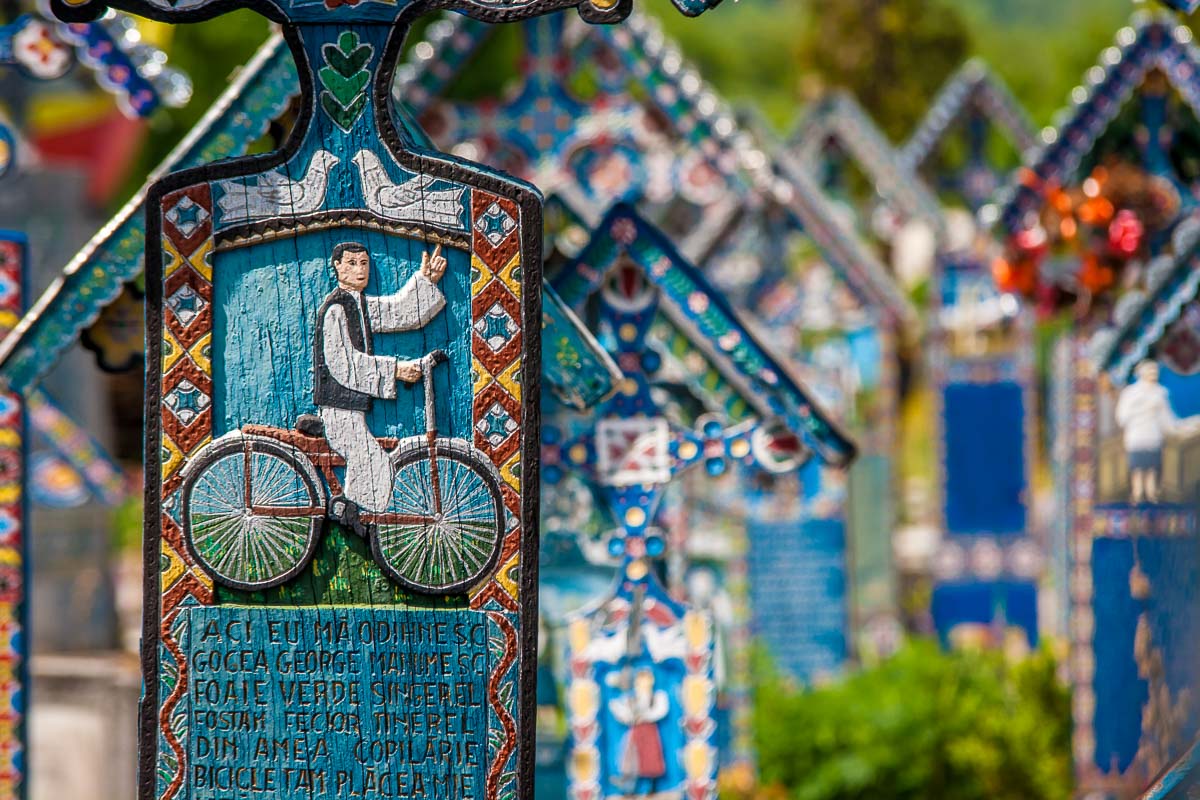
Crossing the Gutâi Mountains, you’ll arrive in Săpânța village, where you will admire the famous Merry Cemetery. It has gained originality and value through the chopped, carved, and painted crosses on which the artisan has chiseled out versified epitaphs, most of them full of a remarkable sense of humor, particular to the area and all Romanians. The value of these works of art is recognized both at home and abroad.
In the same village, you’ll stop to admire the highest wooden structure in the world: the recently rebuilt Peri Convent.
In Sighet, you will hear more about the horrors of the communist regime. You will visit a former prison where, during the communist years, many important Romanian leaders, but also common people who were against the regime, lost their lives.
The day ends in a local guest where you’ll meet a wonderful family. It is here that you’ll enjoy a rich dinner and plenty of tuica, also known as palinca, which is a sort of strong plum brandy. You will enjoy a room with a private bathroom.
Overnight in Maramures village: guest house, rooms with private bathroom
Day 5
MARAMUREȘ - BÂRSANA - MOLDOVIȚA - SUCEVIȚA - BUCOVINA (approx. 5h drive)
Today, the journey is long and beautiful. You’ll visit one of the highest wooden churches in the world, Bârsana Convent.
Perched on the hills of Maramures, overlooking the Iza Valley, the Bârsana Convent is one of Romania's most impressive monastic places, although it was rebuilt recently. The slender, tall silhouette of the wooden church, the carvings on each building, and the amazing garden represent a perfect synthesis of the locals' strong faith, their skills, and nature.
Then, enter Bucovina for the first time, known for its painted monasteries and the traditional houses adorned with beautiful floral and geometrical motifs, for its traditions kept over the centuries, and for its hospitable people.
Bucovina is also known for its painted eggs. A symbol of Romanian tradition and artistry, the painted eggs of Bucovina are famous for their intricate designs and vibrant colors. Each egg is a miniature masterpiece, hand-decorated with beeswax and natural dyes, following techniques passed down through generations. The motifs—geometric, floral, or religious—carry deep symbolic meanings, celebrating life, faith, and renewal. That’s why you’ll visit a private museum exhibiting thousands of eggs (subject to availability).
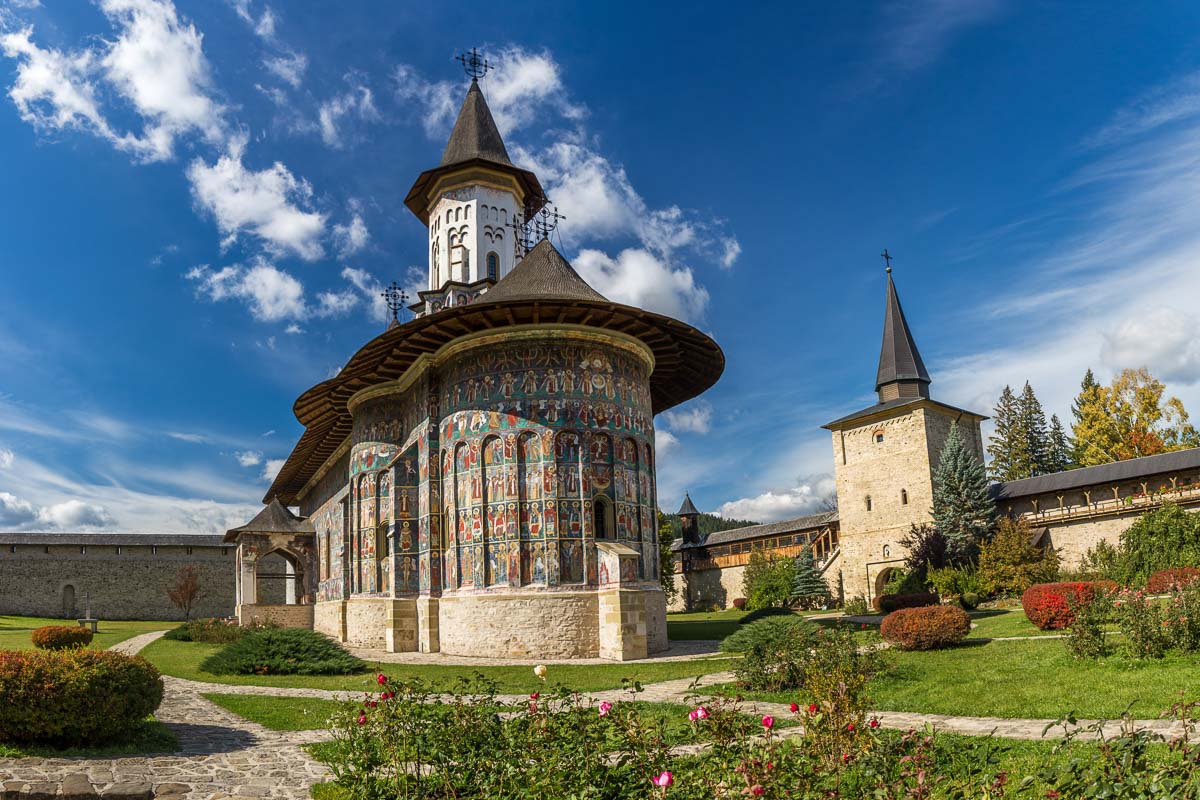
The last drive of the day takes you through the gentle mountains of Bucovina. In the end, you’ll reach Sucevița, known for its stunning painted church, the most impressive and the best preserved of all the painted churches. This religious complex, which looks more like a fortress, is set up in a beautiful valley surrounded by green mountains.
Overnight in Bucovina: 4-star hotel
Day 6
BUCOVINA - VORONEȚ - BICAZ - SZEKELY LAND (approx. 5h40min drive)
Today, the journey is long but impressive.
The first visit of the day will be the Voroneț Convent. Erected in 1488, Voroneț Monastery was one of the first Moldavian artistic creations to exhibit a distinctive style. The church combines Byzantine, Gothic, and local elements. The exterior painting on the western wall depicts the Last Judgment in five registers, a unique feature worldwide. The Voroneț Monastery was inscribed on the universal cultural heritage for its paintings, which feature the inimitable “Voroneț blue.”
You will leave Bucovina behind and re-enter Transylvania. It is here that you’ll be astonished by the wonders of nature. The Bicaz Gorge and Red Lake are among Romania's most well-known landmarks.
Then you’ll be taken to the heart of the Hungarian minority living in Szeklerland. It is here where you’ll be able to admire the traditional way of living of these people and their amazing old houses.
Overnight in Szeklerland: superior estate

Day 7
SZEKLERLAND - BRAN - BRAȘOV (approx. 3h 10min drive)
After breakfast, you will depart for Bran Castle. On the way, you’ll take a detour to the Zărnești Gorge. A spectacular limestone canyon, it offers one of the most dramatic landscapes in the Carpathians. The narrow passage, with cliffs rising to over 200 meters, follows a gentle trail along a stream — perfect for hiking, photography, or simply enjoying the silence of nature. The gorge is also home to rare flora and fauna, including chamois and eagles.
Then, you will visit the famous Bran Castle, also known as Dracula’s castle. It was a fortified castle along the trade route that connected Transylvania and Wallachia. The people of Brașov built it between 1377 and 1378. In the consciousness of any tourist, it represents the dark residence of Prince Dracula, a fictional hero in the famous novel written by the British author Bram Stoker. In reality, Bran Castle is connected to Queen Marie of Romania. Her story is equally interesting to that of Dracula, if not more interesting.
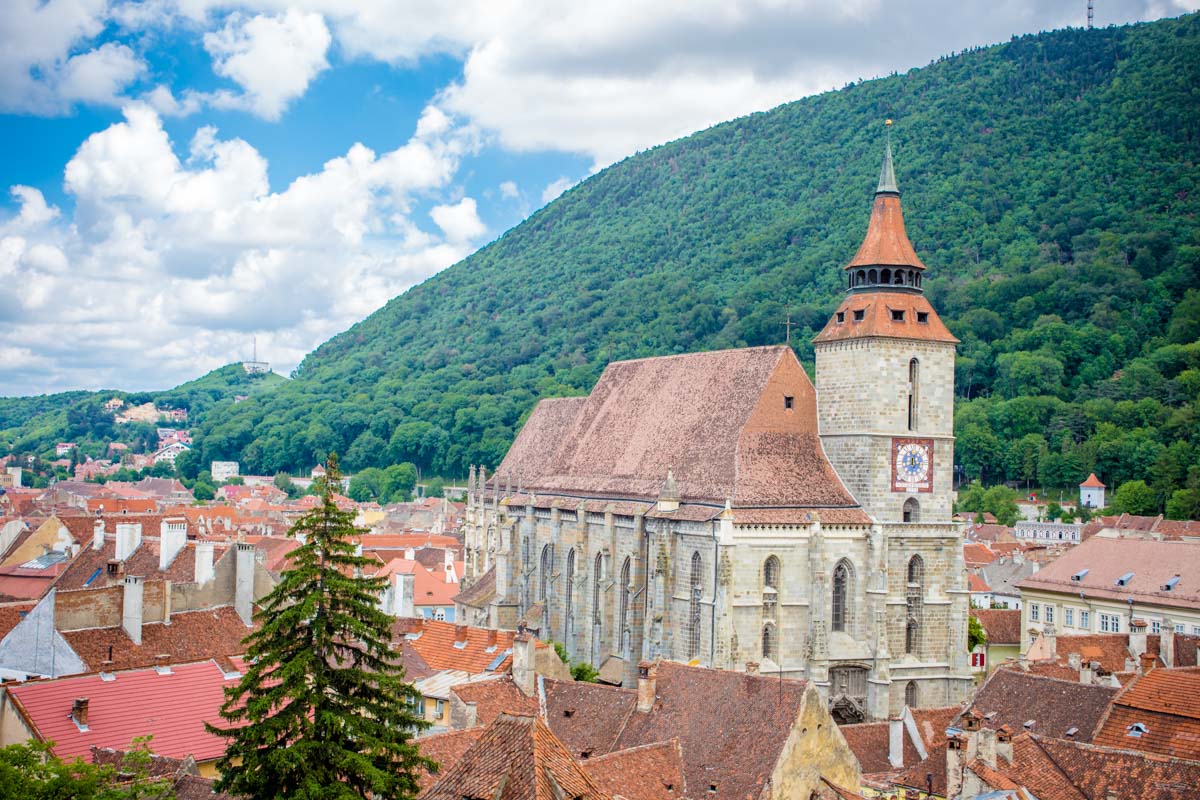
In the end, enjoy a short walking tour in the old town of Brașov. You’ll admire the beautiful buildings, like the Black Church, which is built in Gothic style. You will also see the narrowest street in Romania, Rope Street, Șchei, and Catherine’s Gates, St. Nicholas Church, and the old Șchei neighborhood.
Overnight in Brașov: 4-star hotel
Day 8
BRASOV – PREJMER - SINAIA– BUCHAREST (approx. 3h45min drive)
After breakfast, you will depart for Prejmer Fortified Church – a UNESCO World Heritage Site. The fortified church of Prejmer (Tartlau) is one of the best-preserved medieval defensive churches in Transylvania. Built by the Teutonic Knights in the early 13th century and later expanded by the Saxons, it features massive, thick walls, a deep moat, and over 270 storage rooms that villagers once used during sieges. Inside, you’ll find a beautifully restored Gothic church with painted altars and an impressive organ. A walk through its concentric corridors and tiny chambers offers a vivid glimpse into medieval Saxon life and defense strategies.
After a scenic drive, you will leave Transylvania, and you will stop in Sinaia to visit the most beautiful castle in Romania – Peleș Castle.
The Peleș Castle, built in two stages between 1875 and 1914, was the summer residence of King Carol I and his wife, Queen Elisabeth. You’ll visit the ground floor and the royal apartments, and you’ll be astonished by the overwhelming interiors, amazing stained-glass windows, and paintings, some made by famous artists such as Gustav Klimt.
In the evening, you’ll reach Bucharest in time for dinner.
Overnight in Bucharest: 4-star hotel

Day 9
BUCHAREST (RO) – RUSE (BG) – VELIKO TARNOVO – PLOVDIV (5h 50min drive)
In the morning, prepare to leave Romania and enter the second country of your journey, Bulgaria.
First, you’ll reach the remote area of the Ivanovo Churches. Part of the UNESCO heritage since 1979, the rock-hewn churches of Ivanovo boast some stunning frescos dating back to the 13th-14th centuries. The monastic life was founded in the 13th century by the future patriarch of Bulgaria, Joachim. All these churches are located in the beautiful valley of the Rusenski Lom River.
Then, stop in Arbanassi, located right next to Veliko Tarnovo, a little and quaint village with a strong medieval atmosphere. You’ll enjoy a stroll, and you’ll admire the beautiful houses.
In the afternoon, you will arrive in Veliko Tarnovo, also known as the City of the Tsars. Located on the banks of the Yantra River, Veliko Tarnovo was the capital of the Second Bulgarian Empire. It is given as one of the strongest fortifications in the area. Even today, the most impressive tourist attraction of the old town is the fortress. You’ll roam on the alleys of the former Tsarevets palace, and you’ll visit the former patriarchal church, rebuilt in modern times. You’ll be taken along the old streets and alleys of the town where you’ll admire the local architecture and the beautiful panorama.
In the afternoon you’ll be transferred to Plovdiv.
Overnight in Plovdiv: 4-star hotel

Day 10
PLOVDIV – SOFIA (1h 45min drive)
After breakfast, enjoy a walking tour of Plovdiv, the second-largest city after Sofia.
Here you’ll learn more about the old town with its 3,000-year-long history. And the best place to do this is the ancient Roman Amphitheater, which boasts impressive marble statues, decorative columns, and arcades.
In the afternoon, enjoy a walking tour of Sofia. You are going to visit Saint Alexander Nevski Cathedral – one of the largest Eastern Orthodox cathedrals in Europe, as well as one of Sofia’s symbols and a primary tourist attraction, Saint George Roman Rotunda dating from the 4th century, Saint Sophia Basilica built by the Roman Emperor Justinian in the 6th century, the Ruins of Serdica, the National Theatre Ivan Vazov, the former Royal Palace, the Synagogue, etc.
Overnight in Sofia: 4-star hotel

Day 11
SOFIA – AIRPORT (30min drive)
You’ll be transferred to the airport according to your flight schedule.
End of the tour
Price
€3386/person sharing a double room
Single Supplement: €470
Book for 3 people and get a discount of 5%
Book for 4 or more persons and get a discount of 10%
Included:
- Airport pick-up and drop-off
- Transport by modern car
- Accommodation for 10 nights in 4-star hotels and B&Bs
- Breakfast each morning
- One homemade dinner in Maramures
- Licensed English-speaking tour guide/driver
- Tour leader/driver in Bulgaria
- Entrance fees to sites included in the program
Not Included:
- Flight ticket
- Hotel extras (telephone, mini bar, etc.)
- Drinks (other than water)
- Other meals except for breakfast
- Photographing or filming fees at the visited sites
- Tips
- Travel insurance
- Personal expenses
Best selling tours:

Treasures of Romania Tour
Treasures of Romania & Bulgaria Tour
