

Transylvania Slow Tour - 9 days
A tour focused on culture, culinary workshops, and meaningful encounters


Highlights of the tour:
Regions
- Wallachia
- Transylvania
- Szekelyland
Cities
- Bucharest
- Sibiu
- Brasov
Major Sights
- Bucharest Farmers' Market
- Transfagarasan Highway
- The Black Church
- Zarnesti Gorge
- Peles Castle
- Bran Castle
UNESCO Attractions
- Sighisoara
- Biertan Fortified Church
- Viscri Fortified Church
- Prejmer Fortified Church
Day 1
OTOPENI AIRPORT – BUCHAREST (40min drive)
Arrival in Bucharest. You’ll be transferred to your hotel where you’ll receive more details about your tour. The rest of the day is at your leisure.
Overnight in Bucharest: 4-star hotel
Day 2
BUCHAREST BY FOOT AND PUBLIC TRANSPORTATION + CULINARY WORKSHOP WITH A LOCAL (about 6 hours)
From your hotel, your tour guide will lead you to the nearest metro station. You will travel via the local underground to a typical communist neighborhood and visit a farmers’ market. This experience offers insight into Romanian eating habits and common ingredients, as you observe how locals purchase fresh vegetables, dairy, and meat products. You will also see typical apartment buildings and learn some interesting facts abot day to day life of Romanians during the communist times.
Soon, you will arrive at the apartment where you will have the opportunity to test your cooking skills and taste local flavors. You will learn how to prepare “ciorba,” a traditional and nutritious soup that is a staple of the Romanian daily meal. Furthermore, you will try the famous “mici”, the skinless sausages the Romanians love so much.
After a generous lunch, it is time to get back to the city center and explore the main highlights of Bucharest. You’ll enter the lively maze of the Old Town — a mix of history, nightlife, and stories. Here, every cobblestone has witnessed the evolution of Bucharest: from medieval market to cosmopolitan capital. Here, you'll reach the small church of Stavropoleos. Built in 1724 by a Greek monk, it is one of Bucharest’s treasures. Its courtyard, shaded by vines and surrounded by carved stone columns, feels like stepping into another century.
The walking tour continues along Calea Victoriei. It was once the main artery of aristocratic life — lined with palaces, cafés, and theatres. Walking down this boulevard feels like leafing through the pages of old Bucharest, often called “Little Paris.”
Next stop is the square that changed Romania’s destiny. In December 1989, tens of thousands of people gathered in Revolution Square to protest against Nicolae Ceaușescu’s dictatorship. From the balcony of the former Communist Party headquarters — the building you see behind the Memorial of Rebirth — Ceaușescu gave his last speech before fleeing by helicopter. The Revolution that started here ended 45 years of communist rule.
Finally, you’ll reach the Romanian Athenaeum — the pride of Bucharest and one of the most beautiful concert halls in Europe. Built in the late 19th century, the Athenaeum is a masterpiece of neoclassical architecture, crowned with a majestic dome and surrounded by Corinthian columns. Inside, its circular hall is adorned with a stunning fresco that tells the story of the Romanian people — from ancient Dacia to modern unification.
The evening is at your leisure.
Overnight in Bucharest: 4-star hotel
Meals: Breakfast, Lunch
Highlights: The Revolution Square, Victory Avenue, Bucharest Old Town, Metro Ride, Farmers’ Market, Cooking Workshop
Day 3
BUCHAREST – CURTEA DE ARGES – SIBIU (5h drive)
Departure to Curtea de Arges, the former capital of Walachia, and visit Curtea de Arges Monastery.
The Episcopal Church, known as the Church of the Curtea de Arges Monastery, was built by the Romanian ruler of Wallachia Neagoe Basarab in 1512-1517. A great legend is connected to this church. It is said Master Manole entombed his wife alive in the church walls so that they would never crumble. In 1875, the beautiful church was demolished and rebuilt by French architect Andre Lecomte du Nouy. The Episcopal Church of Curtea de Arges houses the tomb of its founder, Neagoe Basarab, and other members of the royal family (Kings Carol I and Ferdinand, and Queens Elisabeth and Mary).
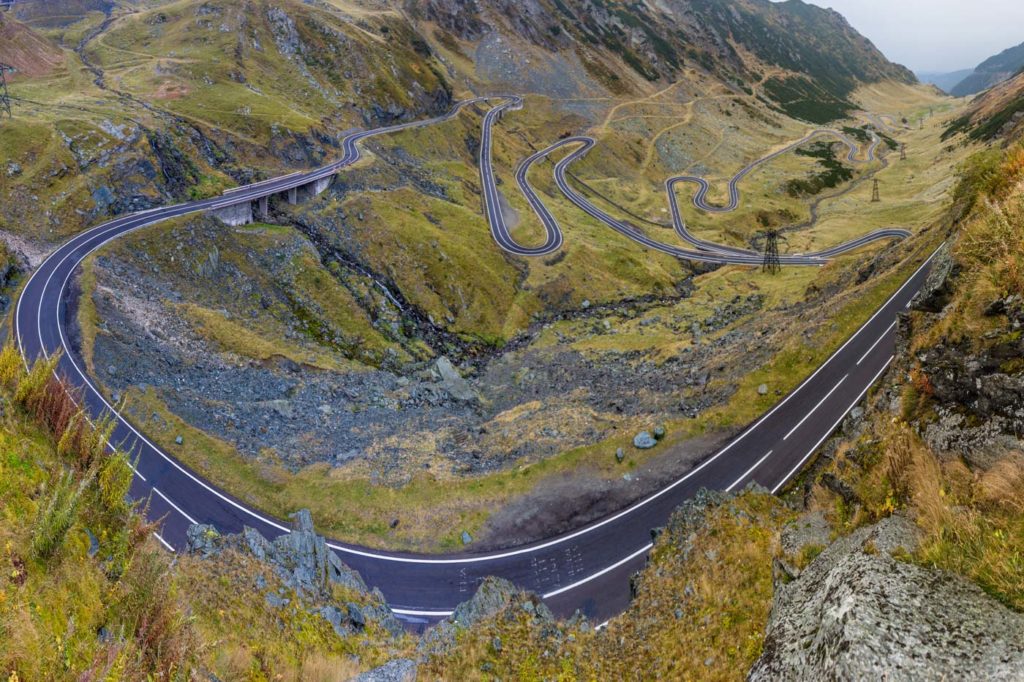
In the afternoon, you’ll drive past the fortress from Poenari built by Vlad the Impaler, and you’ll continue along the famous Transfagarasan Highway. Built in just 4 years, the highway passes the Carpathian Mountains. The landscape is stunning, and you’ll stop several times for pictures. Once on the top of the mountain, you’ll admire Balea Lake. (Between November 1st and June 30, Transfagarasan Highway will be replaced with the road along the Olt Valley).
Late in the afternoon, you’ll be in Sibiu, one of the most beautiful German towns.
Overnight in Sibiu: 4-star hotel
Meals: Breakfast
Highlights: Curtea de Arges Monastery, Poienari Fortress (view from outside), Transfagarasan Road, Balea Lake.
Day 4
SIBIU – HUNEDOARA - SIBIU (3h drive)
In the morning, you’ll be taken to Hunedoara, where you’ll visit the largest Gothic castle in Transylvania. Built in the 14th-15th centuries, the castle belonged to the ancestors of King Corvinus, the Hungarian king of the 15th century. It is here that Vlad the Impaler was imprisoned on his way to Budapest.
In the afternoon, you’ll enjoy a walking tour of Sibiu. Hermanstadt, to use its German name, was founded by the Saxon colonists about 800 years ago. In a short time, Sibiu became one of the most important cities of Transylvania. Sibiu boasts several medieval squares, including the Great Square (Piata Mare), which is the largest of this kind in Romania. It is surrounded by old houses, impressive palaces such as the Brukenthal Palace, and by religious constructions, including the Catholic Cathedral. The tour of Sibiu continues with the other squares, the oldest cobblestone streets, and you’ll find out more about the legend that surrounds the Bridge of Lies. The tour of Sibiu ends with the Evangelical Cathedral and the former medieval towers.
Overnight in Sibiu: 4-star hotel
Meals: Breakfast
Highlights: Hunyadi Castle, Sibiu’s Large Square, The Small Square, The Evangelical Cathedral.

Day 5
SIBIU - BIERTAN - SIGHISOARA - TRANSYLVANIAN VILLAGE (2h drive)
In the morning, you’ll set off for Sighisoara. On the way, you’ll take a detour to the UNESCO site of Biertan. Located in a beautiful rural area of Transylvania, the castle-church of Biertan is perched on a hill surrounded by old Saxon houses which preserve the medieval atmosphere. You’ll enjoy a tour of the fortress and church, where you’ll learn the history of this place, and you’ll hear some funny stories.
Take a short walk along a sector of the famous Via Transilvanica. During the walk, you can enjoy panoramic views of the village and the fortified church.
Sighisoara, another UNESCO site in Transylvania, is the next stop on your trip. Built by the Germans about 800 years ago, the medieval citadel of Sighisoara looks like a perfect postcard. It is the best-preserved citadel in Romania, a stunning combination of cobblestone streets, medieval walls, massive watchtowers, and old architecture. Add to these the House of Vlad Dracul, allegedly the birthplace of Dracula. You’ll visit the Clock Tower, the symbol of Sighisoara, and the Church on the Hill, one of the oldest buildings of the citadel.
In the evening, return to the traditional Saxon villages. You’ll stay in a traditional Saxon house, where your host will spoil you with a home-cooked dinner.
Accommodation in a Transylvanian village: traditional guesthouse
Meals: Breakfast and home-cooked dinner
Highlights: Biertan fortified church (UNESCO), Sighisoara medieval citadel (UNESCO), traditional Saxon village.

Day 6
TRANSYLVANIAN VILLAGE - VISCRI - SZEKELYLAND - BRASOV (3h drive)
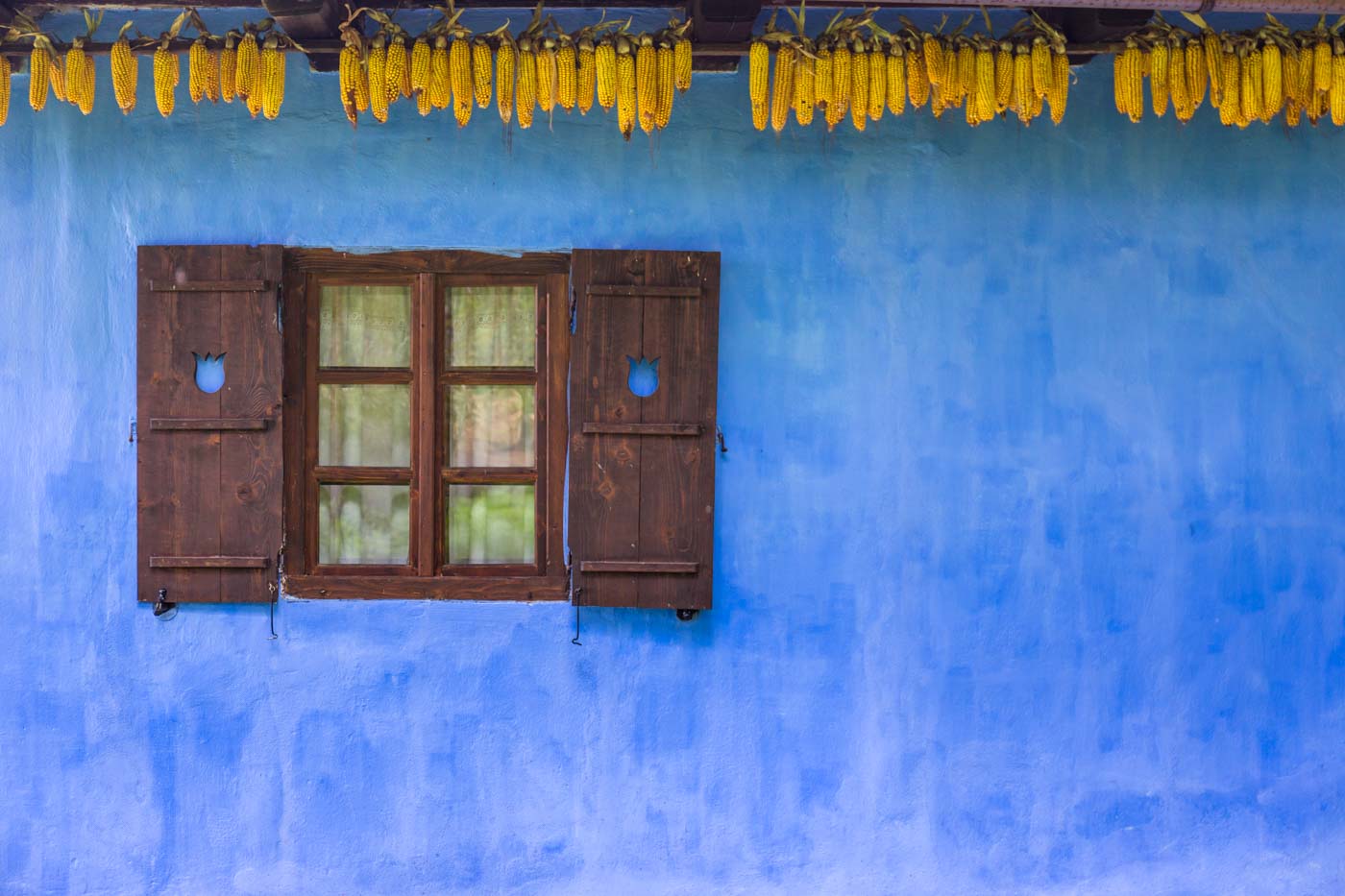
It’s time to discover the forgotten world of the former Saxon villages. On the way to Brasov, we’ll make a detour to the remote village of Viscri, a great UNESCO site. There are just 2 or 3 dirt roads in Viscri, the main one being quite broad. This road is flanked on both sides by beautiful and traditional houses, built in the Saxon style. At the outskirts of the village, perched on a hill, there is the fortified church of Viscri, one of the oldest fortified churches in Transylvania. You will visit the church and the small museum located at the entrance.
One of the best-preserved rural areas in Romania is the one where the Hungarian minority lives. It is known as the Szekely Land or Szeklerland. We will show you the life and the traditions of the Hungarians from Romania.
At noon, you will enjoy a traditional lunch and a culinary workshop in a Szekler household. Your host will teach you how to prepare the famous and delicious kürtőskalács. You will learn how to make the dough and roll it onto a wooden stick to be slow-cooked over an open fire.
The day continues with a visit to a wooden watermill, more than 150 years old. Even today, the locals come here for their wheat flour. Meet the owner of the watermill and see how this old machinery still works (5 euros/person).
Late afternoon, set off to Brasov, where you will spend the following 2 nights.
Overnight in Brasov: 4-star hotel
Meals: Breakfast and home-cooked lunch
Highlights: Viscri fortified church (UNESCO), the House of King Charles III, local watermill, Hungarian villages, cooking workshop
Day 7
BRASOV - BRAN - CARPATHIAN VILLAGES - BRASOV (2h drive)
After breakfast, you will depart for Bran Castle.
On the way, you’ll take a detour to the Zarnesti Gorge. A spectacular limestone canyon, it offers one of the most dramatic landscapes in the Carpathians. The narrow passage, with cliffs rising over 200 meters high, follows a gentle trail along a stream — perfect for hiking, photography, or simply enjoying the silence of nature. The gorge is also home to rare flora and fauna, including chamois and eagles.
Finally, you will visit the famous Bran Castle, also known as Dracula’s castle. It was a safeguard castle for the trade route that connected Transylvania and Wallachia; it was built by the people of Brașov between 1377 and 1378. It represents for many tourists the dark residence of Prince Dracula, a fictional hero in the famous British novel written by Bram Stoker. In reality, Bran Castle is connected to Queen Marie of Romania. Her story is equally attractive to that of Dracula, if not more interesting.
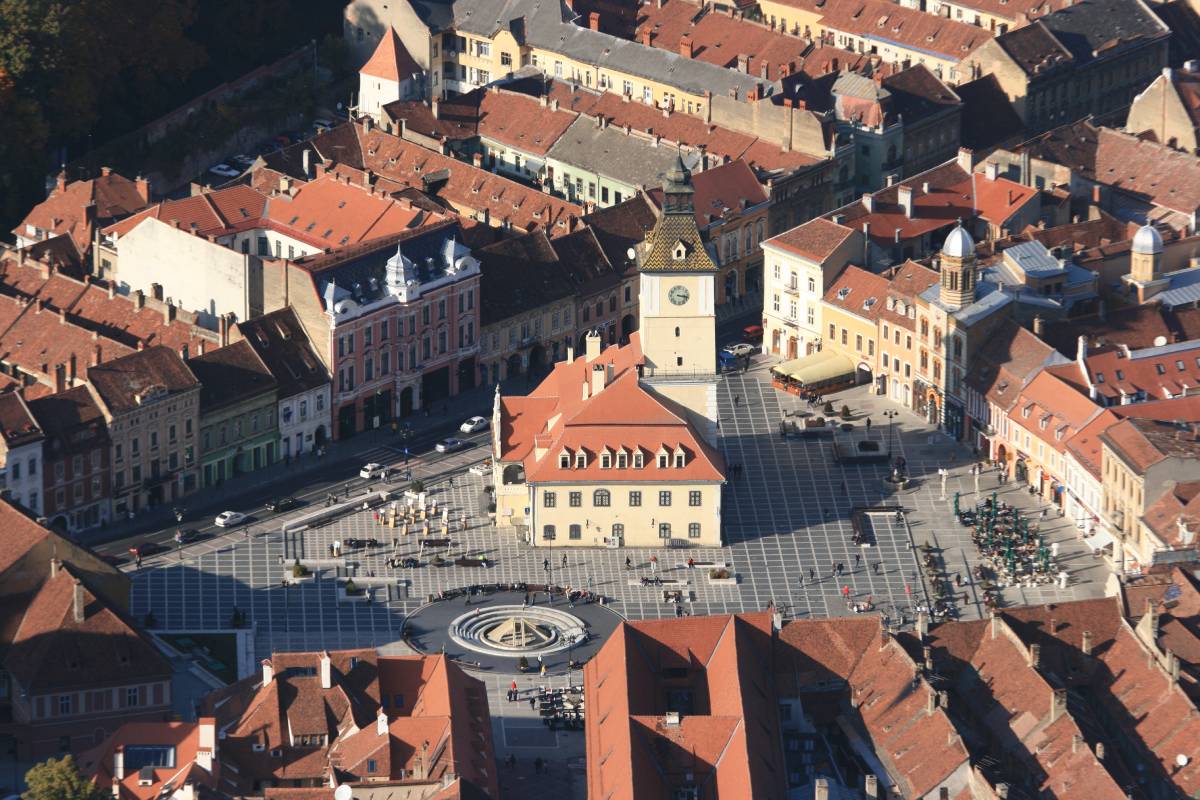
In the afternoon, you will enjoy a short walking tour of the old town of Brasov. You’ll admire the beautiful buildings like the Black Church, which is built in Gothic style. Also, you will see the narrowest street in Romania, Rope Street, Schei, and Catherine’s Gates, St. Nicholas Church, and the old Schei neighborhood.
Overnight in Brasov: 4-star hotel
Meals: Breakfast
Highlights: Easy hike in the Carpathian Mountains, Bran Castle, Brasov walking tour, the Black Church
Day 8
BRASOV – PREJMER - SINAIA– BUCHAREST (4h drive)
The Prejmer Fortress is the first visit of the day and the last fortified church of the tour. It is one of the most impressive fortified churches in Transylvania and a UNESCO World Heritage Site. Built by the Teutonic Knights in the early 13th century and later expanded by the Saxon settlers, it boasts a Gothic style, modeled after churches from the Rhineland, with a powerful structure that reflects both religious and defensive purposes. Surrounding it are massive fortifications, with walls up to 12 meters high and 3–4 meters thick, making Prejmer one of the strongest medieval defensive constructions in Eastern Europe. Inside the walls, more than 270 rooms were built, stacked on several levels, serving as storage spaces and shelters for villagers during sieges. The fortress was attacked many times by Tatars, Ottomans, and other invaders, yet it was captured only once in its long history.
It’s time to leave Transylvania behind. You’ll cross the mountains back into Wallachia, and you’ll stop in Sinaia, also known as the Pearl of the Carpathian Mountains. You’ll visit the local monastery, the oldest building in the town. Further on, you’ll be literally overwhelmed by the splendor of Peles Castle. Built at the request of Carol I, the first king of Romania, Peles Castle is considered one of the most beautiful castles in Europe. The unique architecture and exquisite interiors are matched only by the beauty of the Carpathian Mountains.
In the afternoon, you’ll be taken back to Bucharest.
Overnight in Bucharest: 4-star hotel
Meals: Breakfast
Highlights: Prejmer fortified church (UNESCO), Peles Castle

Day 9
BUCHAREST – OTOPENI AIRPORT (40min drive)
You’ll be transferred to the airport according to your flight schedule.
End of the tour
Price
€2430/person
Book for 3 persons and get a discount of 5%
Book for 4 or more persons and get a discount of 10%
Single Supplement: €425
Included:
- Airport pick-up and drop-off
- Transport by a modern car
- Accommodation for 8 nights in 4-star hotels and B&Bs
- Breakfast each morning
- One home-cooked dinner and two home-cooked lunches
- Licensed English-speaking tour guide/driver
- Entrance fees to sites included in the program
- Two culinary workshops
Not Included:
- Flight ticket
- Hotel extras (telephone, mini bar, etc.)
- Other meals, except for those mentioned
- Photographing or filming fees at the visited sites (if required)
- Watermill visit (5 Euros per person)
- Tips
- Travel insurance
- Personal expenses
Best selling tours:

Treasures of Romania Tour
Treasures of Romania & Bulgaria Tour
