

Home / Tours / Shared Tours /
The Countryside of Romania Tour - 12 days
Romania starts where the asphalt ends. Group upt to 6 persons

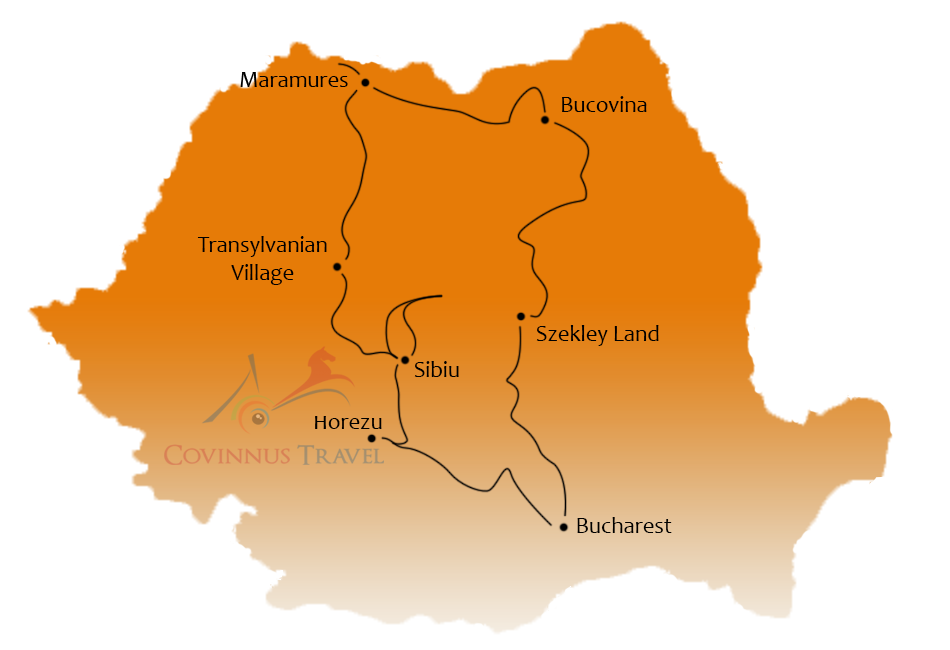
Highlights of the tour:
Regions
- Wallachia
- Transylvania
- Maramures
- Bucovina
- Moldova
Cities
- Bucharest
- Sibiu
- Sighisoara
- Hunedoara
- Alba Iulia
- Brasov
Major Sights
- Transfagarasan Highway
- Corvin Castle
- Vlad Dracul House
- Turda Salt Mine
- Merry Cemetery
- Bicaz Gorge
- Bran Castle
- Prejmer fortified church
- Peles Castle
UNESCO Sights
- Horezu Monastery
- Sighisoara
- Transylvania's fortified churches
- Surdesti Wooden Church
- The Painted Monasteries
Day 1: Monday,
OTOPENI AIRPORT – BUCHAREST (approx. 45min drive)
Arrival in Bucharest. You’ll be transferred to your hotel in Bucharest. The rest of the day is at your leisure.
Overnight in Bucharest: 4-star hotel
Day 2: Tuesday,
BUCHAREST - HOREZU (approx. 4h drive)
In the morning, you’ll be picked up from your hotel. Before departing the city of Bucharest, you’ll stop in front of the Romanian Parliament, where you’ll discover the story behind 45 years of communism.
Leave Bucharest in the morning and head off to Horezu. Here you can discover one of the most beautiful monastic places of Romania, a great UNESCO site. The architecture is breathtaking, and the frescoes are very well preserved. It was built in a beautiful area surrounded by a forest. Unfortunately, the founder, Constantin Brancoveanu, had a tragic end, being executed by the Ottomans and his four sons and one son-in-law.
Horezu is the synonym for ceramics in Romania. It is here that you can admire the most beautiful traditional ceramics in Romania. In addition, you’ll get to visit a local potter who will show you the ancient technique of making ceramics (5 euros/person).
In the afternoon, you’ll be in a village known for its 19th-century massive fortified mansions. You’ll be able to visit them and find out more details about the lives of the nobles who built them.
In the end, you’ll enjoy the beauty of a quiet village and gorgeous accommodation, one of the highlights of the tour.
Overnight in a quiet village: traditional mansion, en-suite rooms
Sights: Horezu Monastery (UNESCO), Horezu pottery (subject to availability), Maldaresti fortified mansions

Day 3: Wednesday,
HOREZU - SIBIU (approx. 5h drive)
Leave the province of Wallachia and cross the Transylvanian Alps into the famous Transylvania. You’ll take the famous Transfagarasan Highway. Built in just 4 years, the highway is the second-highest road in Romania. The landscape is stunning and you’ll stop several times for pictures. Once on the top of the mountain, you’ll admire Balea Lake. (Between November 1st and June 30, Transfagarasan Highway will be replaced with the road along the Olt Valley).
Sibiu, the European Cultural Capital in 2007, is the most beautiful city in Romania. Founded by the Germans about 800 years ago, Sibiu boasts the largest Saxon-like squares in Romania, impressive medieval architecture, quaint passageways, and cobbled streets. You’ll be taken to the old center, you’ll roam through its squares, and you’ll visit the Catholic Church or the Orthodox Cathedral. You’ll be shown the old medieval towers, bastions, and walls. You’ll be taken to the oldest parts of Sibiu, and you’ll find out much more about the Bridge of Lies. In the end, you’ll climb the Town Hall Tower from where you’ll have a lovely view over the town and beyond.
Overnight in Sibiu – boutique hotel or superior guest house - en-suite rooms
Sights: Transfagarasan road scenic drive, short stop at the Balea Lake, walking tour of Sibiu, the Town Hall Tower

Day 4: Thursday,
SIBIU - SIGHISOARA - SIBIU (approx. 3h45min drive)
Today you’ll be taken on several back roads where you’ll discover the real beauty of Transylvania. Passing through several hidden villages, built hundreds of years ago by the Saxon colonists, you’ll reach a Roma town where you’ll discover the magic world. Meet a local coppersmith Roma family and see how they live in a globalized world - 10 Euros per person (subject to availability).
Further on, you’ll be taken back to the hidden roads of Transylvania, and you’ll get to admire the UNESCO site of Biertan. When the German colonists arrived in Transylvania 800 years ago, they realized they were under constant threat of different invasions. That’s why they built hundreds of fortified churches. The one from Biertan was built in the 16th century and even today guards the village.
Not far away lies one of the best-preserved medieval citadels of Europe.
Sighisoara, a UNESCO site since 1999, consists of massive walls, tall towers, cobblestone streets, and medieval houses. Some historians believe that Vlad the Impaler, also known as Dracula, was born right in the citadel. The Clock Tower is the symbol of Sighisoara. Climb its stairs and enjoy the panoramic view over the town.
Get back to Sibiu, taking again forgotten roads. Pass through several Saxon villages and admire their traditional architecture or old fortified churches.
Overnight in Sibiu: boutique hotel or superior guest house
Sights: Roma family meeting (subject to availability), the fortified church of Biertan (UNESCO), and Sighisoara (UNESCO).

Day 5: Friday,
SIBIU - HUNEDOARA - ALBA IULIA (approx. 3h45min drive)
In the first part of the day, you’ll be transferred to Hunedoara for the spookiest building in Europe, the Corvin Castle. Built in the 14th century, it became an important stronghold of Transylvania.
At this castle, you’ll find two interesting legends, and you’ll roam the halls of this impressive Gothic castle.
More than that, you’ll be astonished to discover the real place where Dracula stayed imprisoned for several weeks.
After lunch, you’ll get to see the biggest and best-preserved Vauban-like citadel in Romania. Built at the beginning of the 18th century, the citadel of Alba Iulia has been restored recently to its former glory. Besides the two cathedrals, the Orthodox and the Catholic ones, you’ll be shown the intricate gates of the citadel, the 3rd gate being the most impressive. The old Roman castrum and the medieval citadel known as Balgrad are now integrated into the Austrian citadel. Their ruins are part of the tour.
Leave behind the cities and once again enter the forgotten world of the Transylvanian villages, where you’ll discover the beauty of Hungarian rural architecture.
Before dinner, you’ll take a walking tour of a village, an exquisite example of the Hungarian villages. The winding dirt roads are flanked by wonderful houses boasting the purity of rural life.
Overnight in a Transylvanian village – superior guesthouse
Sights: the castle of Corvin, a short walk in Alba Iulia Vauban citadel, and a walking tour of a Transylvanian village

Day 6: Saturday,
ALBA IULIA - TURDA - SURDESTI - MARAMURES (approx. 4h30min drive)
The tour of Romania continues with a very different tourist sight. The salt mine of Turda, probably the best in Europe, has received a major investment, and it has been transformed into an important tourist attraction of Romania. Along with its interesting history, impressive size, an underground lake, and long corridors, the salt mine boasts a fantastic game of lights.
Passing through the villages of Maramures, you’ll arrive in the village of Surdesti, where you’ll visit the first wooden church on this trip. This UNESCO site boasts the purity of the locals’ faith, their outstanding talent for building wooden constructions, and a great level of modesty through its traditional simplicity.
You’ll arrive at your final destination, a traditional guest house located near Sighetu Marmatiei. You’ll be in time for a great traditional homemade dinner.
Overnight in Maramures: traditional guesthouse, private bathroom
Sights: the salt mine of Turda, the UNESCO site of Surdesti

Day 7: Sunday,
MARAMURES DAY TOUR (approx. 2h drive)
In the morning, you’ll be taken to a local market where you can see the farmers selling their products (subject to availability). The cheese market is a must. Further on, we’ll dramatically change the register. You’ll be taken to the Memorial of the Anti-communist Victims from Sighetu Marmatiei. Probably, this is the most important museum a Romanian should visit. It is here, in this former political prison, that you’ll find out many things about the horrors of the communist regime.
Not far away from Sighetu Marmatiei lies the village of Sapanata. In this village, a local carver had the great idea of carving wooden crosses which were painted in bright colors. Every cross depicts an image of the buried one and more or less funny epitaphs. Don’t miss the cross of the drunker or mother-in-law.
Overnight in Maramures: traditional guesthouse, private bathroom
Sights: the local market (subject to availability), the Sighet Memorial, the Merry Cemetery, the Peri Convent, and a short walk in the village

Day 8: Monday,
MARAMURES - BARSANA - BUCOVINA (approx. 5h30min drive)
In the village of Barsana, you’ll visit the Convent of Barsana. Although it has a long history, the present monastic complex is a new building built in 1992. The convent is not just another religious place but a fine testimony of the wooden constructions from Maramures. Add to all these a fantastic garden and an incredible rural landscape.
It’s time to enter Bucovina, the historical region known for the painted churches, the gentle slopes of the Carpathian Mountains, and great food. Bucovina is also known for its painted eggs. A symbol of Romanian tradition and artistry, the painted eggs of Bucovina are famous for their intricate designs and vibrant colors. Each egg is a miniature masterpiece, decorated by hand using beeswax and natural dyes, following techniques passed down through generations. The motifs—geometric, floral, or religious—carry deep symbolic meanings, celebrating life, faith, and renewal. That’s why you’ll visit a private museum exhibiting thousands of eggs (subject to availability).
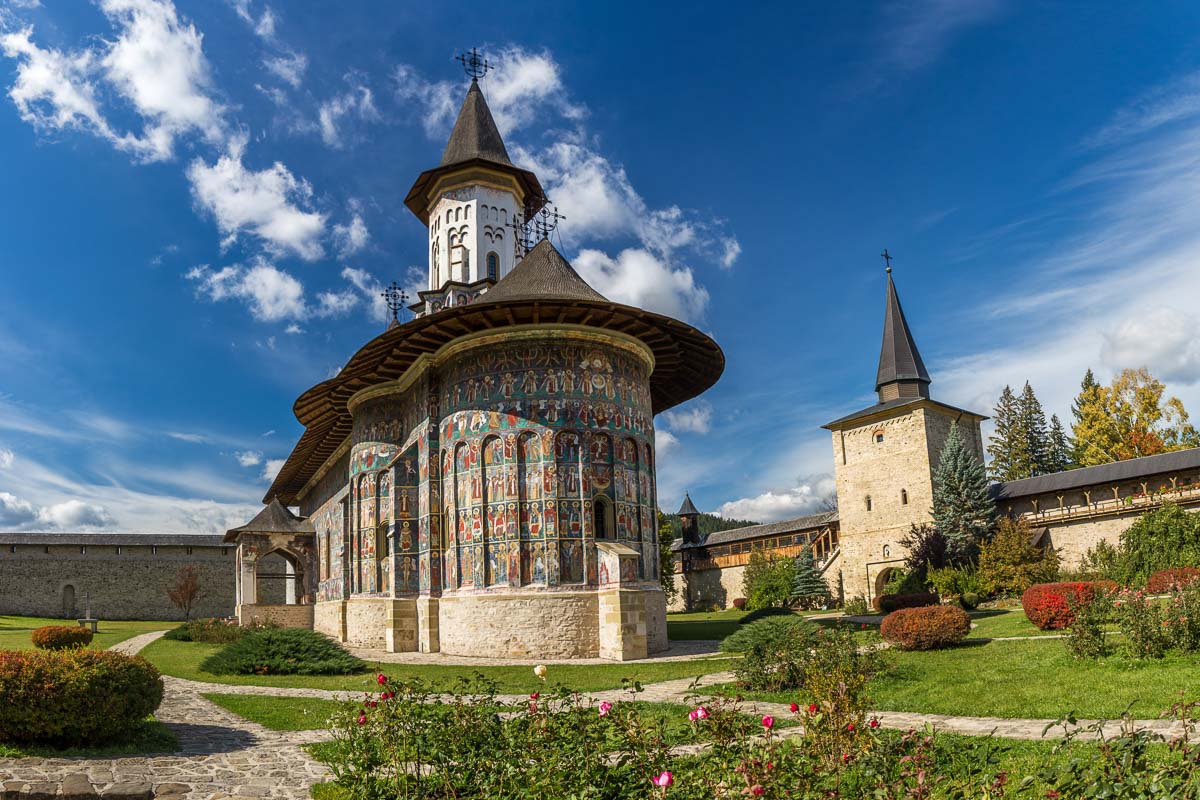
Driving through the gentle hills of Bucovina, you’ll reach Sucevita. Here you’ll admire the largest and most impressive painted church. Sucevita was the last to be painted. At that time, the artists had learned how to obtain everlasting pigments. Therefore, Sucevita boasts the best-preserved frescoes, such as “The Ladder of Virtues.”
Before the final destination, you’ll have the last stop in Marginea, the center of black ceramic in Romania. It is here that you can visit the artists’ workshop, and you can admire their works.
Overnight in Bucovina – superior guesthouse/boutique hotel
Sights: Barsana Convent, the Museum of the Painted Eggs, the painted monastery of Sucevita (UNESCO)
Day 9: Tuesday,
BUCOVINA - BICAZ - SZEKELY LAND (approx. 5h30min drive)
Today, the journey is long but impressive.
The first visit of the day will be the Voronet convent. Erected in 1488, Voronet Monastery represented one of the first Moldavian creative elements showing a distinctive style. The church is a combination of Byzantine, Gothic, and local elements. The exterior painting on the western wall depicts, on five registers, the Last Judgement scene, unique in the whole world. The Voronet Monastery entered the universal cultural heritage also for having in the composition of the paintings the inimitable “Voronet blue”.
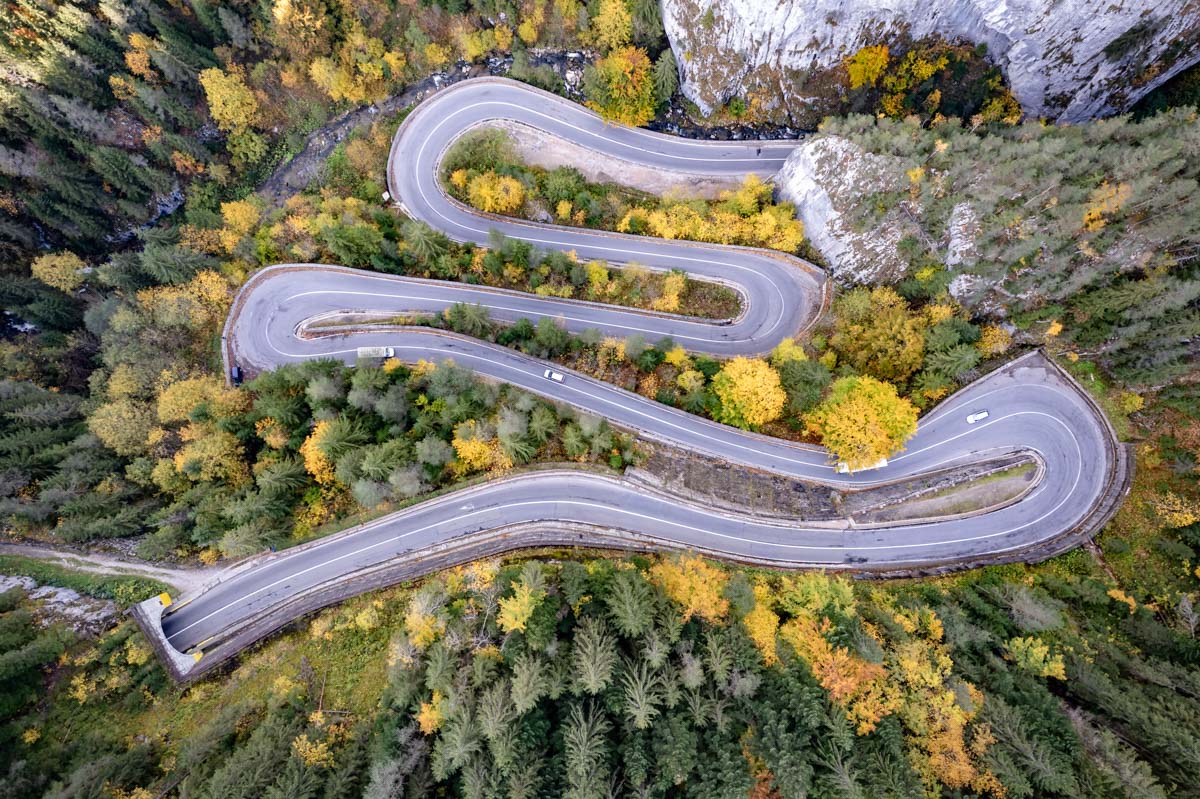
You will leave behind Bucovina, entering again into Transylvania. It is here that you’ll be astonished by the wonders of nature. The Bicaz Gorge and Red Lake are among the most well-known landmarks of Romania.
Then you’ll be taken to the core of the Hungarian minority that lives in an area known as Szeklerland. It is here where you’ll be able to admire the traditional way of living of these people and their amazing old houses.
You’ll stay in the manor house. Prepare yourself to step back in time…
Accommodation in Szekely Land: superior estate
Sights: the Voronet painted church (UNESCO), Bicaz Gorge, the Red Lake
Day 10: Wednesday,
SZEKELY LAND - MOUNTAIN HIKE - BRAN - BRASOV (approx. 2h 30min drive)
After breakfast, you will depart for Bran Castle. On the way, you’ll take a detour to the Zarnesti Gorge. A spectacular limestone canyon, it offers one of the most dramatic landscapes in the Carpathians. The narrow passage, with cliffs rising over 200 meters high, follows a gentle trail along a stream — perfect for hiking, photography, or simply enjoying the silence of nature. The gorge is also home to rare flora and fauna, including chamois and eagles.
Finally, you will visit the famous Bran Castle, also known as Dracula’s castle. It was a safeguard castle for the trade route that connected Transylvania and Wallachia; it was built by the people of Brașov between 1377 – 1378. It represents for many tourists the dark residence of Prince Dracula, a fictional hero in the famous British Bram Stoker. In reality, Bran Castle is connected to Queen Marie of Romania. Her story is equally attractive to that of Dracula, if not more interesting.
In the afternoon, you will enjoy a short walking tour of the old town of Brașov. You’ll admire the beautiful buildings like the Black Church, which is built in Gothic style. Also, you will see the narrowest street in Romania, Rope Street, Schei, and Catherine’s Gates, St. Nicholas Church, and the old Schei neighborhood.
Accommodation in Brasov: 3 or 4-star boutique hotel
Sights: Bran Castle, easy hike in the Carpathian Mountains, Brasov walking tour, the Black Church

Day 11: Thursday,
BRASOV – PREJMER – SINAIA– BUCHAREST (approx. 4h drive)
The Prejmer Fortress is the next visit and the last fortified church of the tour. It is one of the most impressive fortified churches in Transylvania and a UNESCO World Heritage Site. Built by the Teutonic Knights in the early 13th century and later expanded by the Saxon settlers, it boasts a Gothic style, modeled after churches from the Rhineland, with a powerful structure that reflects both religious and defensive purposes. Surrounding it are massive fortifications, with walls up to 12 meters high and 3–4 meters thick, making Prejmer one of the strongest medieval defensive constructions in Eastern Europe. Inside the walls, more than 270 rooms were built, stacked on several levels, serving as storage spaces and shelters for villagers during sieges. The fortress was attacked many times by Tatars, Ottomans, and other invaders, yet it was captured only once in its long history.
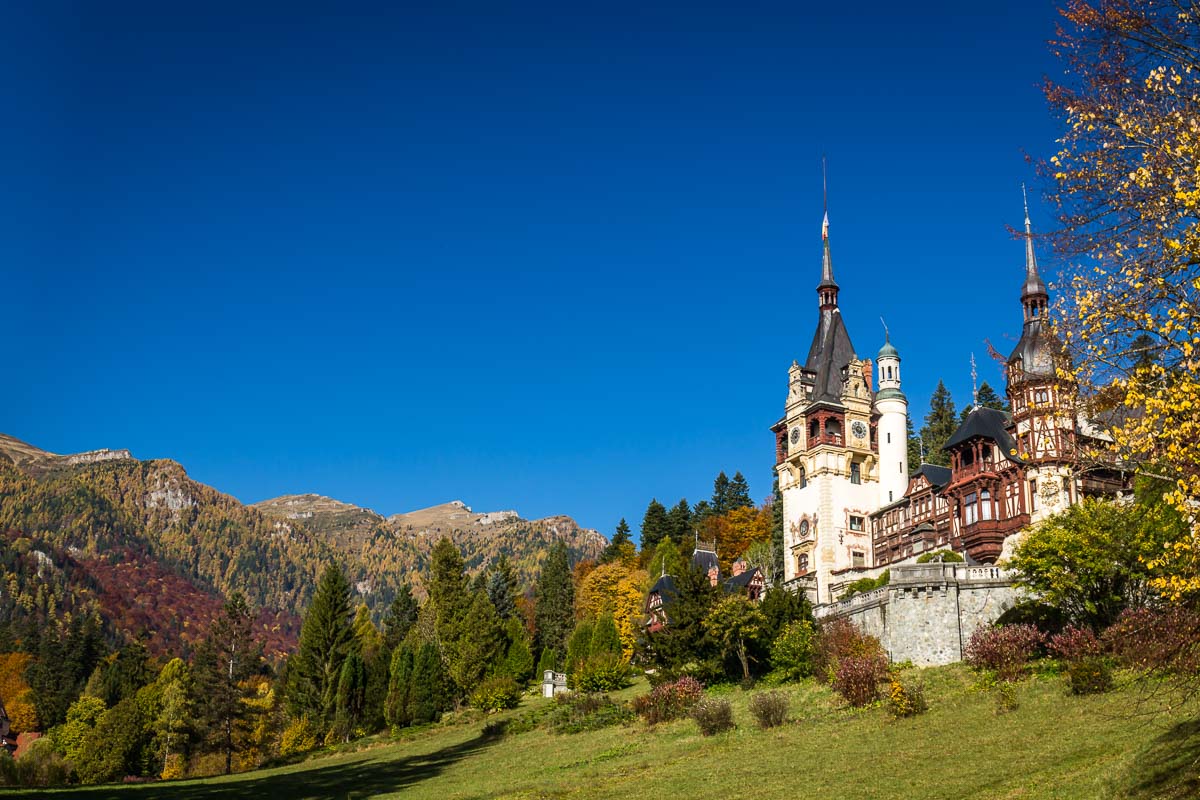
After a scenic drive, you will leave Transylvania, and you will stop in Sinaia to visit the most beautiful castle in Romania – Peles Castle.
The Peles Castle, built in two stages between 1875 and 1914, was the summer residence of King Carol I and his wife, Queen Elizabeth. You’ll visit the ground floor, where you’ll be astonished by the overwhelming interiors, unique stained-glass windows, and paintings, some of them made by famous artists such as Gustav Klimt.
In the evening, you’ll reach Bucharest.
Accommodation in Bucharest: 4-star hotel.
Sights: Prejmer peasant fortification (UNESCO), Peles Castle
Day 12: Friday,
BUCHAREST – OTOPENI AIRPORT (approx. 45min drive)
You’ll be transferred to the airport according to your flight schedule.
End of the tour
Price
€3559/person sharing a double room
Single Supplement: €485
Book for 3 people and get a discount of 5%
Book for 4 or more people and get a discount of 10%
Included:
- Airport pick-up and drop-off in Bucharest (one hour waiting time from the moment of landing; 40 euros extra charge per transfer for the second hour);
- Transport by a modern car;
- Accommodation according to the program;
- Breakfast;
- 2 homemade dinners in Maramures (please inform us about any dietary allergies or restrictions);
- Licensed English-speaking tour guide/driver;
- Entrance fees to sites included in the program;
- All taxes, parking fees, VAT.
Not Included:
- Flight ticket;
- Hotel extras (telephone, mini bar, etc.);
- Other meals, except for breakfast;
- Photographing or filming fees at the visited sites;
- Artisans' visit fees;
- Tips;
- Travel insurance;
- Personal expenses.
Best selling tours:

Treasures of Romania Tour
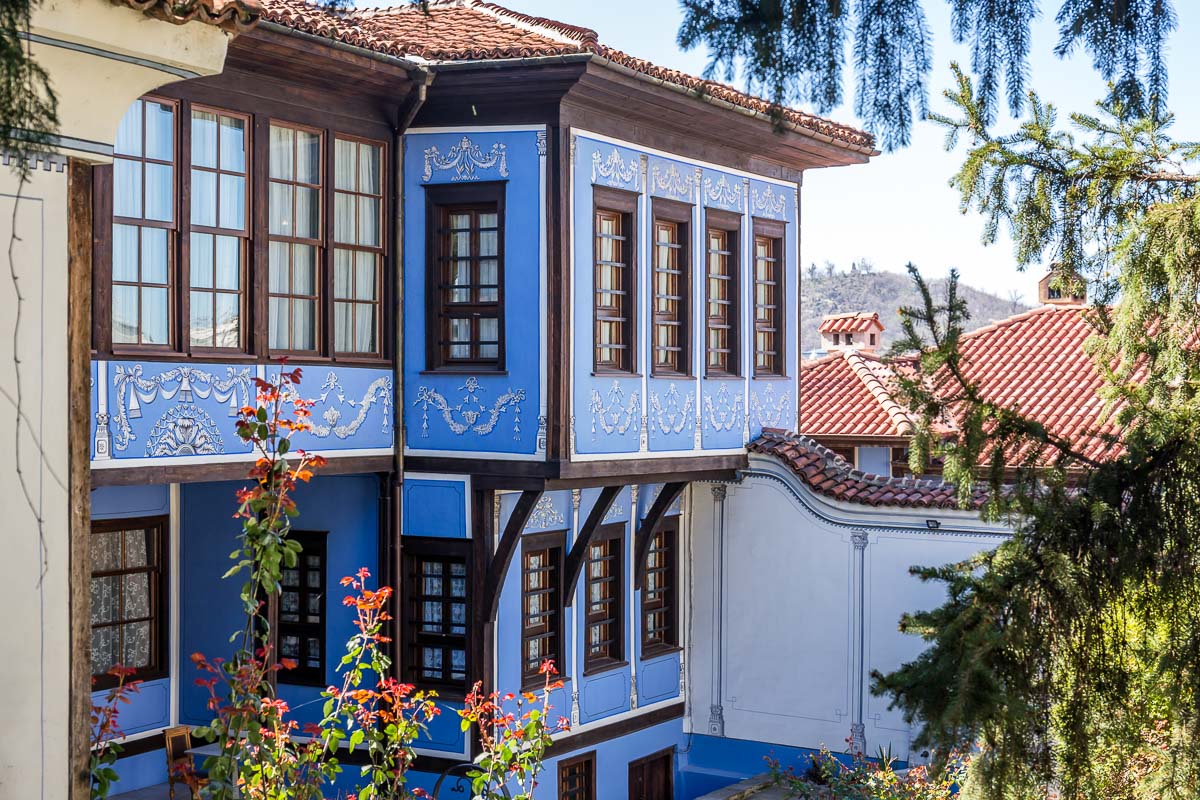
Treasures of Romania & Bulgaria Tour
