

Home / Tours / Private Tours /
Budapest to Sofia Tour - 13 days
From Hungary to Bulgaria via Romania, 3 countries in one tour


Highlights of the tour:
Countries
- Hungary
- Romania
- Bulgaria
Cities
- Budapest
- Cluj Napoca
- Alba Iulia
- Sibiu
- Brasov
- Bucharest
- Veliko Tarnovo
- Plovdiv
- Tryavna
- Sofia
Major Sights
- The Hungarian Parliament
- St. Istvan Basilica
- Merry Cemetery
- Turda Salt Mine
- Bran Castle
- Peles Castle
- The Romanian Parliament
- Tsarevets Fortress
- Tryavna old town
- Plovdiv Roman Ruins
UNESCO Attractions
- Danube banks in Budapest
- Surdesti Wooden Church
- Sighisoara
- Biertan Fortified Church
- Ivanovo Rock-hewn Churches
Day 1
BUDAPEST (40min drive)
Arrival in the capital of Hungary. You’ll be transferred from the airport to Budapest. The rest of the day is at your leisure.
Overnight in Budapest: 4-star hotel
Day 2: Saturday
BUDAPEST: Pesta walking tour
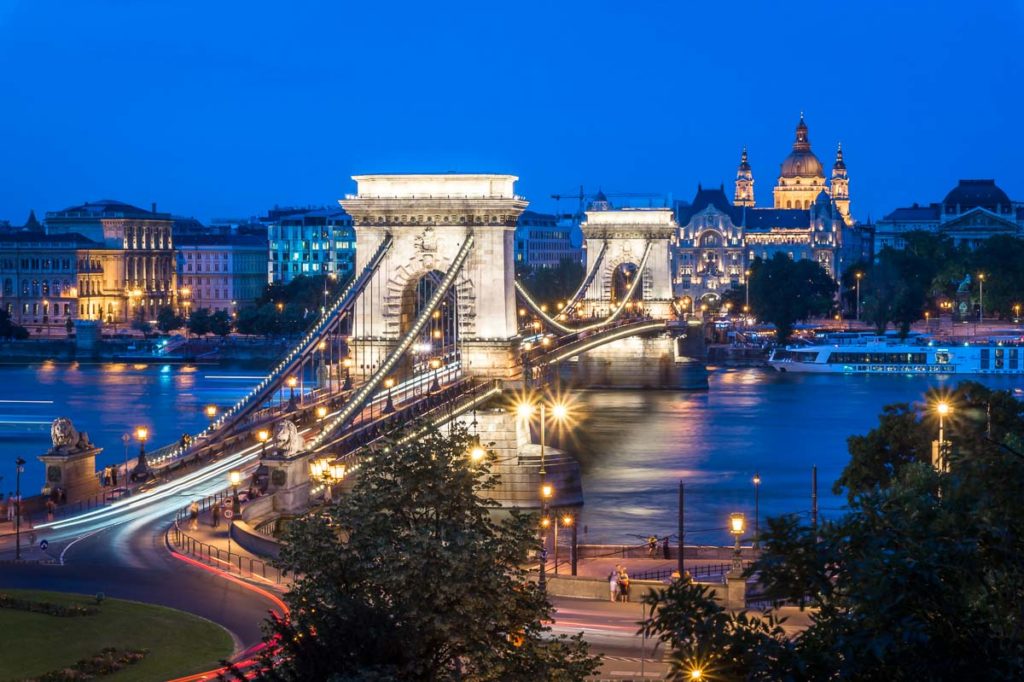
Your half-day tour of Pest begins at the Hungarian Parliament, the great riverside palace whose faceted towers and domes seem to converse with the Danube. Built at the height of Hungary’s confidence, the building rises like a stone epic, each arch retelling a different chapter of the nation’s past. As you walk around Kossuth Square, the city opens slowly. From here, we follow elegant streets toward St. István Basilica. Its dome collapsed during construction, but the city rebuilt it, and today the basilica stands as a grand promise fulfilled. Inside, marbles glow in warm hues, gold leaf flickers, and the revered Holy Right Hand of King St. Stephen rests as a symbolic anchor to Hungary’s origins.
You continue toward Váci Street, Pest’s long street of movement, conversation, and commerce. Once the promenade of the Austro-Hungarian elite, it still carries a trace of that elegance. Shop windows sparkle, pastries release soft flavors, and the street feels like a living corridor where architecture, aromas, and languages blend into a single urban melody. The pulse of the city becomes more vibrant as you near the Great Market Hall, a neo-Gothic hall crowned with shimmering Zsolnay tiles. Inside, Budapest reveals itself through color and flavor. There are piles of paprika, cured meats hang with ceremonial pride, and merchants call out with familiar warmth. On the upper level, folk crafts and embroidered fabrics bring another layer to the city’s story, while visitors often pause for a bite of lángos or a sip of tokaji wine, tasting a distilled form of Hungary’s culinary identity.
From the market, you return to the river, stepping onto the Danube Promenade where the city seems to breathe more gently. Across the water, Buda rises with its hills, palaces, and statues, forming a monumental skyline that changes mood with the light. Along the promenade, sculptures, historical plaques, and grand hotels pass by. The river keeps you company as you walk north, its broad surface reflecting fragments of sky and city. Eventually, the Parliament reappears, now touched by the later glow of the day, completing the circle of our exploration. This walk through Pest weaves architecture, spirit, daily life, flavor, and river rhythms into one continuous story, allowing the district to reveal itself not in isolated stops but as a living, breathing whole.
Overnight in Budapest: 4-star hotel
Day 3: Sunday
BUDAPEST – TOKAJ - SAPANTA (Romania) (7h drive)
Today is going to be a long day, as you will leave Hungary and head to the 2nd country, Romania. On the way, stop in Tokaj for an interesting and captivating wine tasting. Tokaj is Hungary’s storied wine region, where volcanic hills cradle vineyards that have produced the world’s first noble-sweet wines for centuries. The famed Tokaji Aszú, shaped by botrytised berries and autumn mists, carries a brightness and depth found nowhere else. The landscape itself feels like a quiet partnership between sun, soil, and tradition, all focused on turning grapes into liquid sunlight.
In the afternoon, cross the border and enter Romania. After the plain scenery from Hungary, now we are changing the register completely as the Carpathian Mountains are welcoming you to the first historical region of Romania, Maramures. Located in the North side of the country, Maramures is a land of old traditions and the reason for the saying “Romania starts where the asphalt ends.” You will be driven along picturesque mountain villages and stop at Sapanta to visit an out-of-the-ordinary cemetery, the Merry Cemetery. Stan Ioan Patras, a local carver, had the idea of carving wooden crosses that were painted in bright colors. Each cross depicts an image of the buried one and more or less funny epitaphs.
In the evening, head to a charming village where you will enjoy a great traditional home-made dinner prepared by a local family.
Overnight in the Maramures – guesthouse, room with private bathroom

Day 4: Monday
MARAMURES – SURDESTI – CLUJ NAPOCA (3h30min drive)
In the morning, enjoy a traditional breakfast, then prepare to visit the household and learn how the people here live.
Leave the village and head to Surdesti to visit the wooden church, a UNESCO Heritage Monument. The construction boasts the purity of the locals’ faith, the outstanding talent of the locals in building wooden constructions, and a great level of modesty through its traditional simplicity.
Continue the journey and prepare to enter the legendary land of Transylvania, the one about which Prince Charles of Wales used to say: “Transylvania is the last corner of Europe where you see true sustainability and complete resilience. There’s so much we can learn from it before it’s too late. ”
The last stop of the day will be in Cluj-Napoca, one of the oldest cities in Romania, dating from Roman times. After checking in at the hotel, you will start a short walking tour of the small historic center of Cluj and admire the Matthias statue, the Catholic Cathedral, the main squares, and the beautiful architecture of the buildings located along the streets.
Overnight in Cluj-Napoca: 4-star hotel

Day 5: Tuesday
CLUJ NAPOCA – TURDA – SIBIU (2h40min drive)
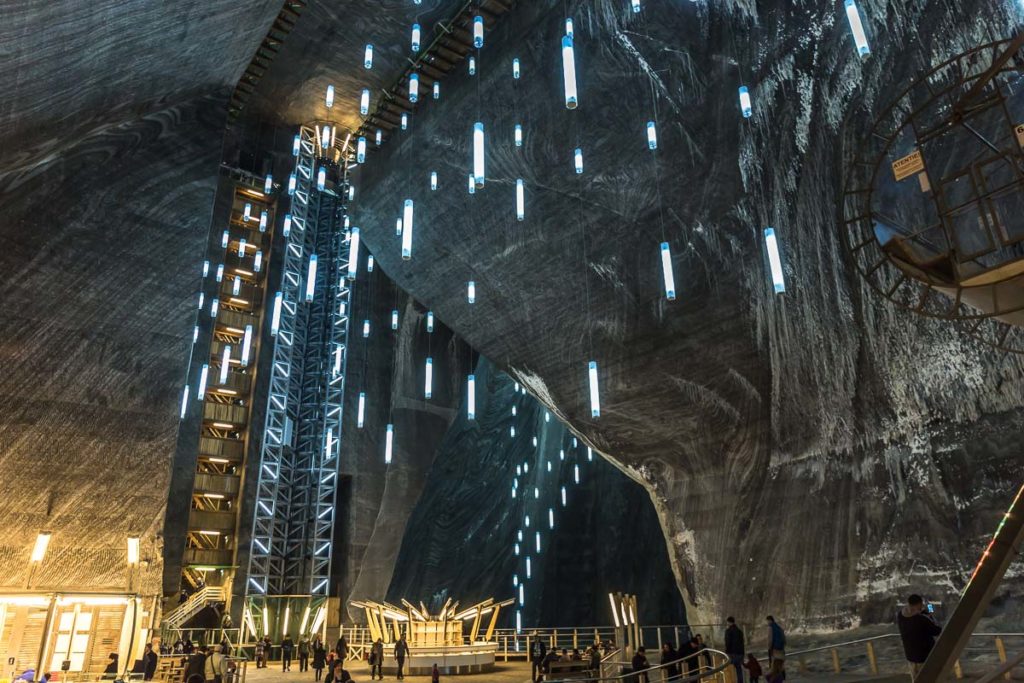
In the morning, leave Cluj-Napoca and start to explore the legendary land of Transylvania. The first stop is at Turda Salt Mine, considered to be the most beautiful and modern salt mine in Romania, very well appreciated abroad, as well.
The first excavations here date back to the 13th century (one of the oldest salt mines in the world), and after 1932, this huge underground space was used as a bomb shelter during WWII and even as a cheese storage center. Nowadays, one heads down more than 90 meters to discover the history of the salt mine and salt excavations in Romania. Probably the most important is the theme park, which, once you reach it, gives you the feeling of being in Wonderland. You will find here an underground lake with rowing boats for the visitors, an amphitheater, a bowling alley, ping pong courts, and even a Ferris wheel.
Prepare to leave this science fiction land and get back on the ground to continue your adventure in Transylvania.
In the afternoon, travel to Sibiu, the last stop of the day. You will be impressed for sure with this beautiful medieval city, founded by the Saxon colonists in the 1190s and declared in 2007 the European Capital of Culture. Hermannstadt, under its German name, is considered to be the most beautiful city in Romania, no matter the season. You will explore the city on foot and admire the Small Square with the famous Liars Bridge, and the Large Square surrounded by beautiful buildings, which will make you feel like you have turned back time. You will also see Huet Square with the most impressive building of Sibiu, the Evangelical Church, featuring the tallest tower in Transylvania and the largest organ in South-Eastern Europe.
Overnight in Sibiu: 4-star hotel
Day 6: Wednesday
SIBIU – SIGHISOARA – TRANSYLVANIAN VILLAGE (2h10min drive)
Today, you will get even deeper into the typical Transylvanian scenery.
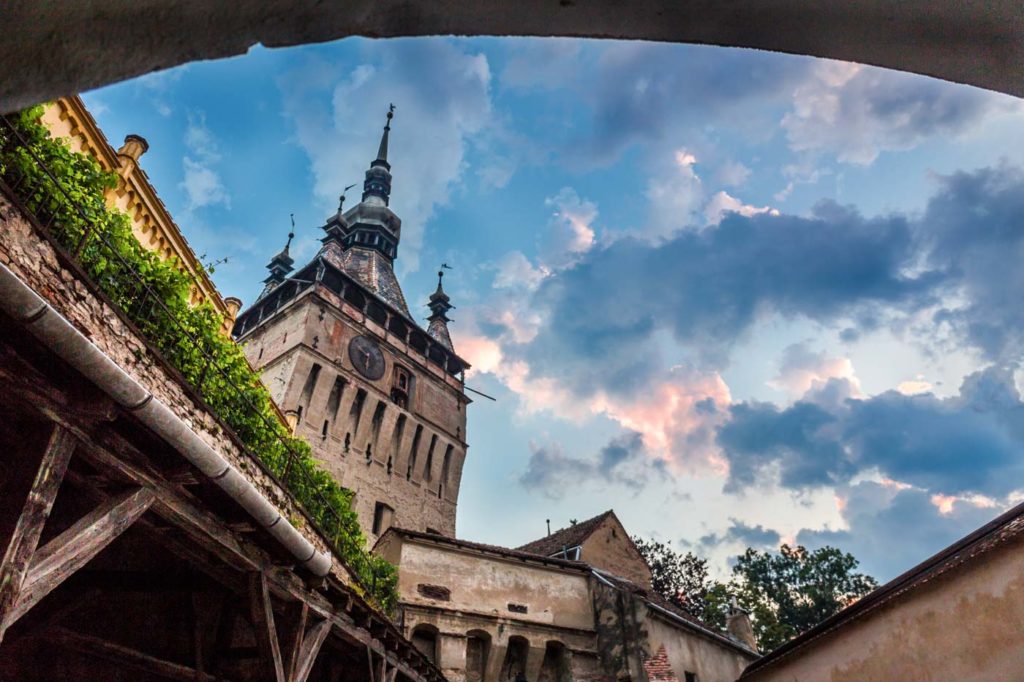
Head to Sighisoara and visit the charming medieval citadel (UNESCO Heritage), one of the oldest medieval citadels in Europe. Also founded by the Saxon colonists from Transylvania, the citadel of Sighisoara is a place you should not miss while in Transylvania. Once you get inside, you will feel like in a medieval movie set and expect at any moment to see a princess walking next to a knight along the narrow cobblestone streets. Take a walk in the citadel and discover its story. Visit the Clock Tower and enjoy from the top the beautiful panoramic view of the whole citadel, admire the walls of fortification and the towers of defense, climb the Scholar’s stairs and reach the beautiful Evangelical Church on the Hill, and, of course, discover the house where it is believed that Vlad the Impaler, known as Vlad Dracula, was born.
Head to a Transylvanian village, a picturesque, small settlement frozen in time. You will enjoy a short tour of the village during which you will admire the beautiful architecture of the Saxon Houses, and you will observe the daily life of the villagers, as the horse-drawn carts pass by. In the evening, enjoy a tasty homemade dinner and an overnight stay in a typical, comfortable Saxon house, which re-enacts the old life of the locals.
Overnight in Transylvanian village – room with private bathroom
Day 7: Thursday
TRANSYLVANIAN VILLAGE – VISCRI – BRAN – BRASOV (3h drive)
After a delicious traditional breakfast, leave the village and head to another picturesque settlement, Viscri.
Cross the rolling hills of Transylvania and reach one of the Saxon villages where Prince Charles of Wales spends his holiday every spring while in Romania. Viscri is another village frozen in time, famous for the well-preserved 12th-century fortified church. The worship place is a UNESCO Heritage site, and it impresses the visitors through the beautiful medieval architecture, the local museum which presents the daily life of the Saxons, and, of course, the view over the whole village from the top of the church’s tower.
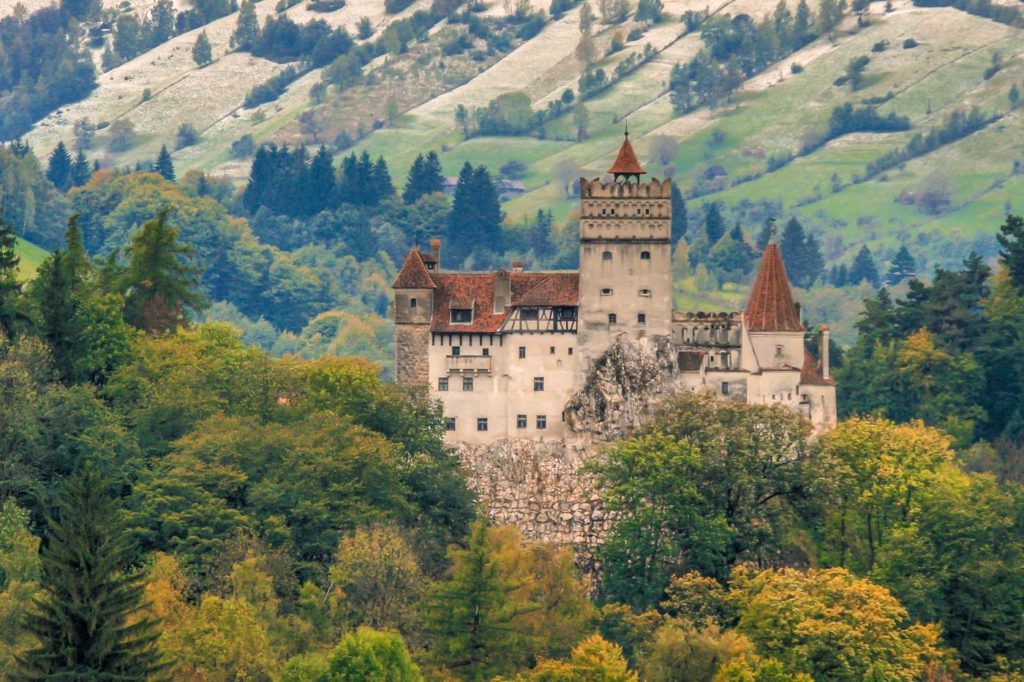
Leave this magic land and head to another place surrounded by mystery, Bran village. Here you will find out the story of the legendary Count Dracula and visit Bran Castle, which became so famous thanks to the Legend of Dracula.
Go to Brasov, another typical Saxon city, also known as Kronstadt, the “City of the Crown”.
Overnight in Brasov: 4-star hotel
Day 8: Friday
BRASOV – SINAIA – BUCHAREST (3h drive)
After breakfast, you will enjoy a short walking tour of Brasov, a medieval city founded in the 13th century. You will see the Council Square guarded by the symbol of the city, the Council Tower, visit the Black Church, one of the largest Gothic worship places in Eastern Europe, discover one of the narrowest streets in Europe, the Rope Street, and finally, admire the beautiful mountains that surround the city.
After Brasov, prepare to leave the land of Transylvania and head to Wallachia, another historical province of Romania located in the southern part of the country. The drive will be pleasant as you will admire the mountain scenery and find out more about the Carpathian Mountain chain and its importance to Romania.
Stop in Sinaia, a beautiful mountain resort, known also as the “Pearl of the Carpathians”. Visit here, the Peles Royal Castle, considered one of the most beautiful castles in Europe. Peles represents the former summer residence of the first royal couple of Romania, Queen Elisabeth and King Carol I.
As you visit the castle, you will admire the unique interior design and be surprised by the modern facilities of the castle from the last half of the 19th century (electricity, vacuum cleaner, electrical elevator, and central heating). Peles Castle is also the place where you will find out the story of the Royal couples of Romania and their importance in the history of our country. After the visit, spend some time in the small garden of the castle, admiring the mountains surrounding the estate.
In the evening, head to Bucharest, the capital city of Romania.
* Peles Castle is closed on Mondays. Rasnov fortress or the Cantacuzino Castle in Busteni may be used as alternatives.
Overnight in Bucharest: 4-star hotel

Day 9: Saturday
BUCHAREST CITY TOUR (walking and public transportation tour - about 5 hours)
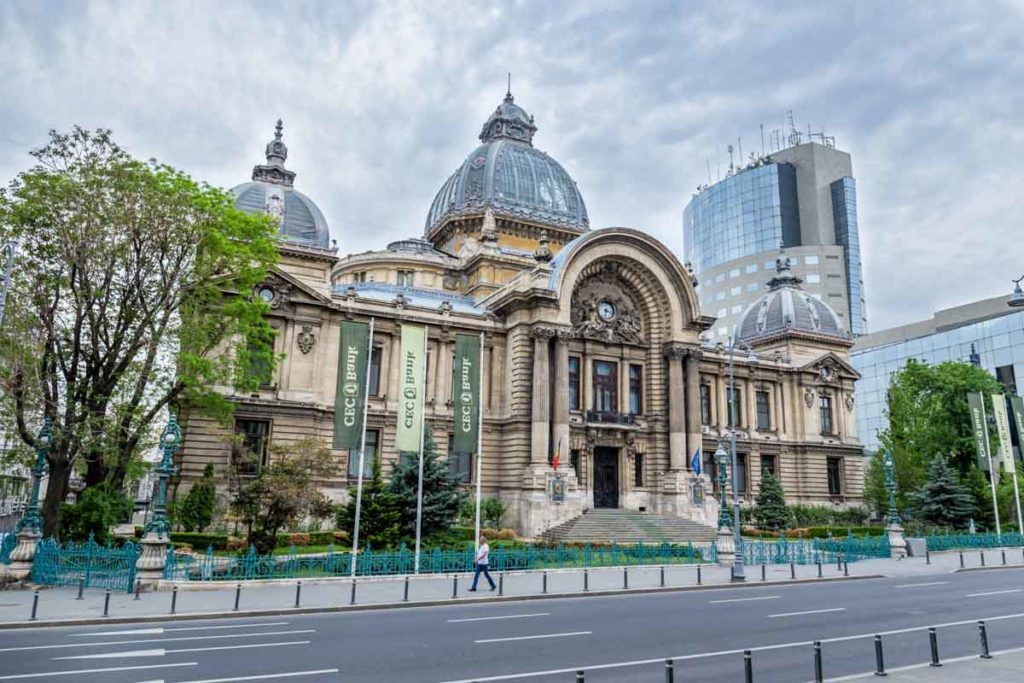
From your hotel, you’ll be taken to the Romanian Athenaeum — the pride of Bucharest and one of the most beautiful concert halls in Europe. Built in the late 19th century, the Athenaeum is a masterpiece of neoclassical architecture, crowned with a majestic dome and surrounded by Corinthian columns. Inside, its circular hall is adorned with a stunning fresco that tells the story of the Romanian people — from ancient Dacia to modern unification.
Next stop is the square that changed Romania’s destiny. In December 1989, tens of thousands of people gathered in Revolution Square to protest against Nicolae Ceaușescu’s dictatorship. From the balcony of the former Communist Party headquarters — the building you see behind the Memorial of Rebirth — Ceaușescu gave his last speech before fleeing by helicopter. The Revolution that started here ended 45 years of communist rule.
The walking tour continues along Calea Victoriei. It was once the main artery of aristocratic life — lined with palaces, cafés, and theatres. Walking down this boulevard feels like leafing through the pages of old Bucharest, often called “Little Paris.”
Then, you continue with the Old Town of Bucharest. Here, you’ll start with the small church of Stavropoleos. Built in 1724 by a Greek monk, it is one of Bucharest’s treasures. Its courtyard, shaded by vines and surrounded by carved stone columns, feels like stepping into another century.
Furthermore, you’ll enter the lively maze of the Old Town — a mix of history, nightlife, and stories. Here, every cobblestone has witnessed the evolution of Bucharest: from medieval market to cosmopolitan capital.
From the old town, you’ll discover the local public transportation network. It’s time to enjoy the largest farmers’ market in Eastern Europe. Here you’ll see how the locals buy fresh vegetables, dairy, and meat products. You’ll find out more about the local cuisine, and you can try the famous “mici”, the skinless sausages Romanians love so much.
The tour ends at your hotel.
Overnight in Bucharest: 4-star hotel
Day 10: Sunday
BUCHAREST (RO) – RUSE (BG) – VELIKO TARNOVO – TRYAVNA (4h15min drive)
In the morning, prepare to leave Romania and enter the second country of your journey, Bulgaria.
First, you’ll reach the remote area of the Ivanovo Churches. Part of the UNESCO heritage since 1979, the rock-hewn churches of Ivanovo boast some stunning frescos dating back to the 13th-14th centuries. The monastic life was founded in the 13th century by the future patriarch of Bulgaria, Joachim. All these churches are located in the beautiful valley of the Rusenski Lom River.
Then, you will arrive in Veliko Tarnovo, also known as the City of the Tsars. Located on the banks of the Yantra River, Veliko Tarnovo was the capital of the Second Bulgarian Empire. It is given as one of the strongest fortifications in the area. Even today, the most impressive tourist attraction of the old town is the fortress. You’ll roam the alleys of the former Tsarevets palace, and you’ll visit the former patriarchal church, rebuilt in modern times. You’ll be taken along the old streets and alleys of the town, where you’ll admire the local architecture and the beautiful panorama.
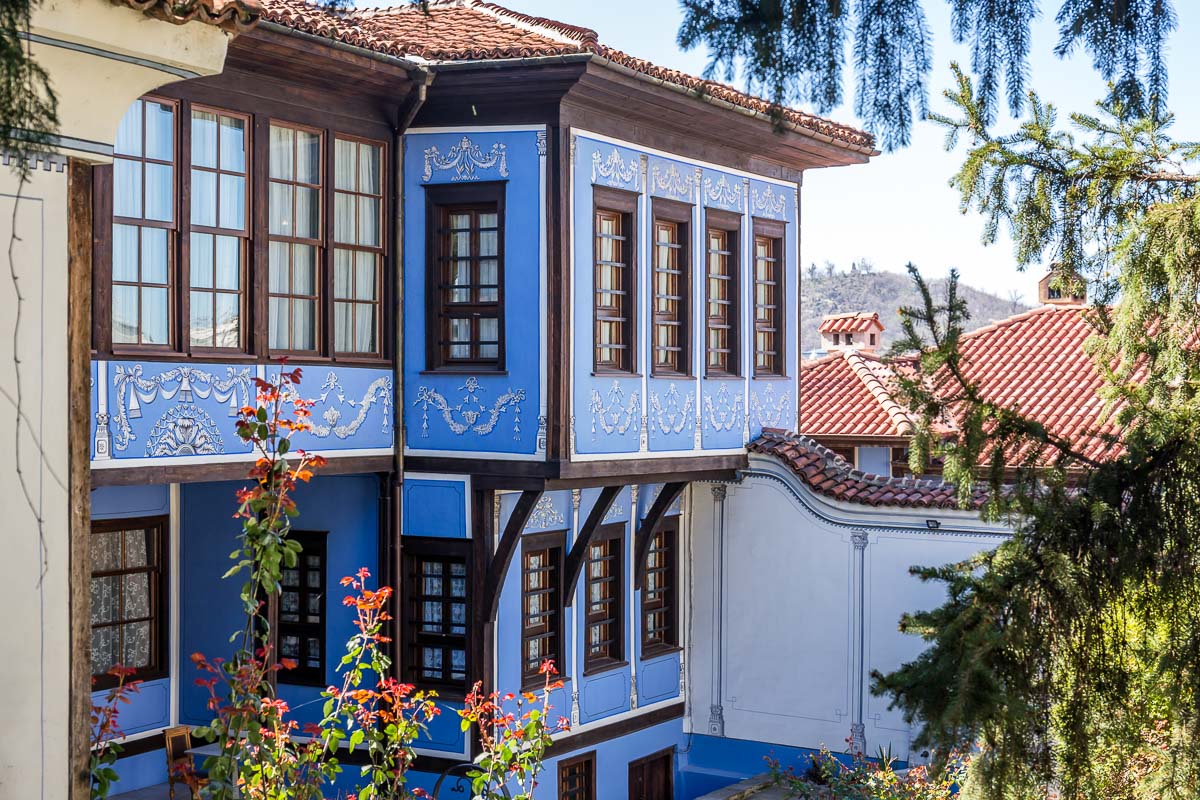
In the afternoon, you’ll be transferred to Tryavna. Its National Revival houses boast warm timber and carved arabesques, the famous Clock Tower chiming over cobbled lanes that once guided craftsmen. Today, the town offers a gentle stroll through artistry, mountain calm, and the soft hum of tradition.
Overnight in Tryavna: 4-star hotel

Day 11: Monday
TRYAVNA - PLOVDIV(1h45min drive)
From Tryavna, you’ll cross the Balkan Mountains via the historic Shipka Pass, stopping at the Shipka Monument to learn about the 1877–1878 Russo-Turkish War and the liberation of Bulgaria.
After descending into the Thracian Valley, the route continues to Plovdiv, one of Europe’s oldest cities, and the second largest one in Bulgaria.
Here you’ll find out more about the old town with its 3000-year-long history. And the best place to do this is the ancient Roman Amphitheater, which boasts a collection of impressive marble statues, decorative columns, and arcades. The tour of Plovdiv can’t be finished without the Bishop’s Basilica of Philippopolis, the largest early Christian church and one of Bulgaria’s most impressive archaeological sites. Dating from the 4th–6th centuries, it showcases over 2,000 square meters of beautifully restored mosaics, many depicting dozens of bird species in intricate detail.
Overnight in Plovdiv: 4-star hotel

Day 12: Tuesday
PLOVDIV – SOFIA (1h 45min drive)
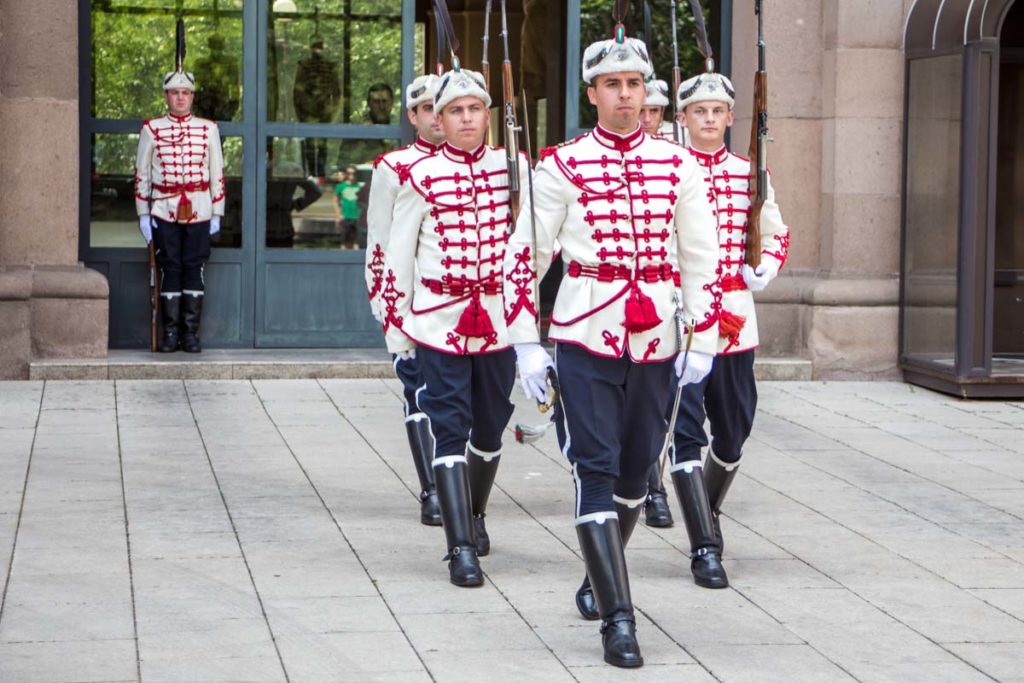
In the morning, you’ll leave Plovdi, and then you’ll enjoy a sightseeing tour of Sofia. You’ are going to visit Saint Alexander Nevski Cathedral – one of the largest Eastern Orthodox cathedrals in Europe, as well as one of Sofia’s symbols and a primary tourist attraction, Saint George Roman Rotunda dating from the 4th century, Saint Sophia Basilica built by the Roman Emperor Justinian in the 6th century, the Ruins of Serdica, the National Theatre Ivan Vazov, the former Royal Palace, the Synagogue, etc.
The rest of the day is at your leisure.
Overnight in Sofia: 4-star hotel
Day 13
SOFIA – AIRPORT (40min drive)
You’ll be transferred to the airport according to your flight schedule.
End of the tour
Price
Group of 2-3 persons - €5430 / person sharing a double room
Group of 4-7 persons - €3998 / person sharing a double room
Single Supplement: €640
Included:
- Private airport transfers in Budapest and Sofia
- Transport by modern car/minibus, fuel included
- Accommodation for 12 nights in 4-star hotels and superior B&Bs
- Breakfast each morning
- Licensed English-speaking tour guide/driver in Romania
- Licensed English-speaking tour leader/driver in Hungary and Bulgaria
- Entrance fees to sites included in the program
- Homemade dinner on Day 4 and Day 7
Not Included:
- Flight ticket
- Hotel extras (telephone, mini bar, etc)
- Other meals, except for breakfast and those already mentioned
- Photographing or filming fees at the visited sites
- Tips
- Travel insurance
- Personal expenses
Best selling tours:

Treasures of Romania Tour
Treasures of Romania & Bulgaria Tour
